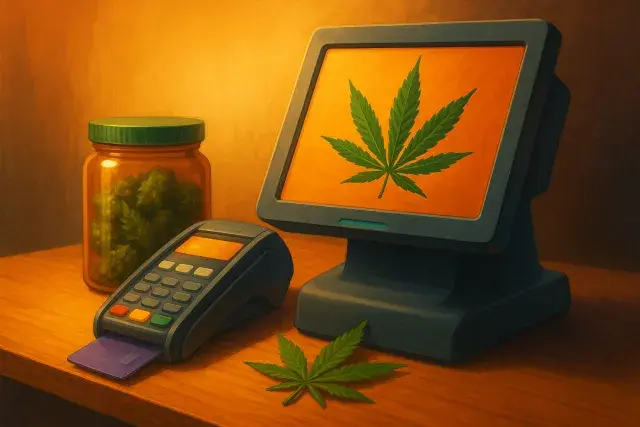

Running a cannabis dispensary without the right point-of-sale infrastructure is like trying to manage a pharmacy with a cash box and a notepad. The consequences aren't just inconvenient - they're regulatory, financial, and reputational. Cannabis retail operates under some of the most demanding compliance frameworks of any consumer industry, and the technology you choose to process transactions sits at the center of all of it.
The market for purpose-built cannabis retail solutions has matured significantly. Where dispensary owners once cobbled together general retail software with workarounds, the industry now has dedicated platforms engineered for seed-to-sale tracking, state compliance, and high-volume consumer demand. Understanding what separates functional marijuana POS hardware from genuinely optimized dispensary technology requires looking past feature checklists and into how systems perform under real operating conditions - during a Saturday afternoon rush, a surprise state audit, or a processor outage.
This guide walks through every layer of the decision: from understanding why cannabis-specific systems exist in the first place, to evaluating hardware configurations, payment processing constraints, compliance requirements, and total cost of ownership. Whether you're opening your first weed shop or upgrading a multi-location operation, the goal here is clarity over sales pitch.
Why Cannabis Dispensaries Can't Use Generic Retail POS Systems
The instinct to save money by adapting a mainstream retail platform - something built for clothing stores or coffee shops - is understandable. These systems are widely available, often cheaper upfront, and familiar to staff. The problem is structural, not cosmetic.
Compliance Requirements That Generic Systems Don't Support
Every licensed cannabis retailer in a regulated state or province must track inventory in alignment with a government-mandated seed-to-sale system. In states like California, Colorado, and Michigan, that typically means integration with Metrc. In others, it might be BioTrackTHC or a proprietary state system. A cannabis dispensary POS system must communicate with these platforms in real time, reporting each transaction, each gram sold, and each product movement automatically.
Generic retail POS software has no mechanism for this. Attempting to manually reconcile sales data with compliance reporting introduces error risk, consumes staff time, and creates audit exposure. Regulators don't offer much leniency for reporting gaps, regardless of how they were caused.
Cannabis-Specific Inventory Complexity
Cannabis inventory isn't like apparel or electronics. Products are measured by weight, potency, and form factor. A single product can exist as flower sold by the gram, an eighth, a quarter, or a full ounce - each with different pricing, tax treatment, and purchase limits. Edibles carry THC dosage restrictions per unit. Concentrates have their own regulatory categories.
A cannabis retail POS terminal must handle all of this natively. It needs to enforce purchase limits per customer per day, flag products that would push a transaction over the legal threshold, and apply the correct tax structure (which often differs between medical and adult-use sales). These aren't features that can be bolted onto a system designed for simpler inventory structures.
Customer Verification and Age Gating
Every sale requires verified age confirmation. In high-volume dispensaries, the process of scanning IDs, confirming eligibility, and linking that verification to a specific transaction must happen quickly without creating a bottleneck at the register. Purpose-built dispensary cash register hardware is designed with ID scanner integration as a native feature, not an afterthought add-on.
Medical dispensaries add another layer: patients must present valid medical cards, and the system must confirm active registry status before any transaction proceeds. Generic POS platforms have no concept of this workflow.
Core Components of a Cannabis Dispensary POS System
A complete dispensary POS setup is more than a screen and a payment terminal. Understanding each component helps owners make decisions that balance functionality, durability, and budget.
The POS Software Platform
The software is the brain of the operation. It manages inventory, processes sales, handles customer records, generates compliance reports, and connects to the state tracking system. When evaluating cannabis dispensary POS software, the most critical criteria are compliance integration depth, stability, and support responsiveness - not the length of the feature list.
Cloud-based platforms offer the advantage of automatic updates, remote access, and easier multi-location management. Locally hosted systems can offer greater control and offline functionality, which matters in areas with unreliable internet. Many modern cannabis platforms offer hybrid architecture that processes transactions locally while syncing to the cloud when connectivity is available.
Weed Shop POS Hardware at the Register
The physical terminal setup at a dispensary register typically includes a touchscreen display, a cash drawer, a receipt printer, a barcode scanner, and a customer-facing display. Each of these components needs to be compatible with the software platform - and in cannabis retail, compatibility isn't always guaranteed with off-the-shelf hardware.
Weed shop POS hardware is often sold as a bundled package by the software provider, which simplifies compatibility but reduces flexibility on pricing. Some dispensaries purchase hardware independently, which requires careful verification against the software provider's supported hardware list. Incompatible peripherals are one of the most common sources of technical problems at the register.
ID Scanners and Customer Management Hardware
Dedicated ID scanning devices read the magnetic stripe or 2D barcode on government-issued IDs, extract the relevant data, and feed it directly into the customer record in the POS. This eliminates manual entry errors, speeds up the check-in process, and creates a verifiable audit trail for age verification compliance.
In dispensaries with a separate check-in area, the ID scanner and customer queue management interface may be a distinct station from the sales register. High-traffic locations sometimes use iPad-based check-in kiosks that feed into the same POS database, allowing budtenders to pull up pre-verified customer profiles before they reach the counter.
Label Printers and Inventory Management Hardware
Receiving and labeling new inventory is a daily task in most dispensaries. A dedicated label printer - separate from the receipt printer - prints product labels with barcodes that correspond to the state tracking system. This hardware is often overlooked during initial setup planning, but its absence creates significant workflow problems during receiving shifts.
Some dispensaries also use handheld barcode scanners for cycle counts and inventory audits. These devices connect to the POS inventory module and allow staff to scan products in storage without printing manual count sheets. For multi-room operations with separate storage and sales floor areas, wireless scanner compatibility is a practical necessity.
Payment Processing in Cannabis Retail: Constraints and Options
Payment processing is where cannabis retail diverges most sharply from conventional retail. Federal banking restrictions on cannabis businesses mean that standard credit card processing - Visa, Mastercard, Amex - is largely unavailable through traditional merchant accounts. This shapes every decision about marijuana store payment hardware and the checkout experience.
Why Traditional Payment Processing Is Restricted
Major card networks operate under federal frameworks that classify cannabis as a Schedule I controlled substance. Banks that process card payments for cannabis businesses risk federal regulatory action. As a result, most major processors decline to work with plant-touching cannabis businesses, and those that do often operate in gray areas with elevated risk of sudden termination.
This isn't a permanent state - federal rescheduling discussions have created real movement in this area - but as of current regulatory conditions, dispensaries must plan around the reality that Visa and Mastercard acceptance cannot be assumed to be stable.
Cash Handling and Dispensary Cash Register Hardware
Cash remains the dominant payment method in many dispensaries. This makes the physical cash management infrastructure - the cash drawer, the safe, the counting procedures - far more important than in typical retail environments. Dispensary cash register hardware must be robust, lockable, and ideally connected to the POS system so that drawer opens are logged against specific transactions.
High-volume dispensaries often invest in smart safes that count and validate bills, generate cash reports automatically, and integrate with armored carrier services. These reduce shrinkage risk and simplify the daily reconciliation process, which in a cash-heavy environment can otherwise consume significant staff time.
Alternative Payment Methods: PIN Debit, ACH, and Cashless ATMs
Several payment models have emerged to offer dispensary customers alternatives to cash. PIN debit, where customers use their debit cards to pull funds directly from their bank accounts, is one of the more stable options. It requires compatible cannabis retail POS terminal hardware that processes debit transactions, and the merchant fees are typically structured differently from credit card processing.
ACH-based systems allow customers to pay directly from their bank accounts, often through a mobile app or QR code at the register. Cashless ATM systems - sometimes called point-of-banking systems - route transactions through ATM networks rather than card networks, though they carry their own compliance considerations and have faced scrutiny from card networks. Each of these approaches has different hardware requirements, fee structures, and levels of reliability.
Cryptocurrency and Emerging Payment Options
Some dispensaries have experimented with cryptocurrency payments as a workaround to banking restrictions. In practice, crypto adoption among dispensary customers remains limited, and the volatility and technical complexity involved make it a supplementary option at best. A small number of dedicated payment fintechs are building cannabis-specific banking infrastructure, and this space is likely to evolve as federal policy shifts.
The practical implication for dispensary operators is to build payment infrastructure that can adapt. The marijuana store payment hardware and processing relationships you establish today should not create lock-in that prevents you from switching methods as the regulatory environment changes.
Evaluating Cannabis Retail POS Terminals for Your Operation
Not all dispensaries have the same needs. A single-register boutique operation in a small market has fundamentally different requirements than a multi-location chain processing several hundred transactions per day. Matching the cannabis retail POS terminal configuration to actual operational scale prevents both overspending and underperformance.
Transaction Volume and Hardware Durability
Consumer-grade hardware - the kind sold in retail electronics stores - isn't designed for the sustained daily use of a commercial retail environment. Touchscreens wear out. Receipt printers jam. Card readers fail. In a dispensary where a malfunctioning terminal can create a line of 20 customers within minutes, hardware reliability is a direct revenue concern.
Commercial-grade cannabis retail POS terminals are built to higher durability standards, with fanless designs that reduce dust accumulation, reinforced touchscreens rated for continuous use, and modular components that can be swapped out without replacing the entire unit. The upfront cost premium is real, but the total cost of ownership over three to five years typically favors commercial hardware.
Single-Location vs. Multi-Location Configurations
Single-location dispensaries can often operate effectively on a simpler POS architecture - a central server or cloud connection, a handful of registers, and standardized peripheral hardware. Multi-location operations require centralized inventory management, consistent pricing and promotion control across all locations, and consolidated reporting for ownership and compliance teams.
The POS platform's ability to support multi-location configurations at the software level is one thing; the hardware infrastructure that supports it is another. Network reliability, backup connectivity options, and the ability to operate in offline mode during outages become significantly more important when a system failure at one location can disrupt operations across an entire chain.
Staff Workflow and Register Layout
The physical layout of the dispensary sales floor influences hardware decisions more than many operators realize. A traditional over-the-counter setup with budtenders stationed behind a counter supports a fixed terminal configuration. A floor model with roaming staff and product display cases may benefit from mobile tablet-based terminals that allow staff to complete transactions wherever the customer is standing.
Customer-facing display screens at the register - showing the itemized transaction, current totals, and loyalty point balances - improve transparency and reduce disputes. These screens are a standard component of most weed shop POS hardware bundles, but their mounting position, visibility angle, and screen brightness matter in environments with varied lighting conditions.
Compliance, Reporting, and Integration Capabilities
A cannabis dispensary POS system that doesn't integrate cleanly with state compliance systems isn't a POS system - it's a liability. This section addresses what compliance integration actually involves and which integration capabilities determine long-term viability.
Seed-to-Sale Tracking Integration
Real-time integration with state tracking systems means that every sale automatically generates a corresponding record in the compliance database. This happens through API connections that the POS vendor maintains and updates as state systems change. When a state tracking system updates its API - which happens periodically - dispensaries using POS platforms with active compliance teams receive those updates without manual intervention.
Dispensaries using platforms without active compliance support may find themselves in a situation where a tracking system update breaks their compliance connection, leaving them unable to report sales legally until the integration is repaired. Evaluating a POS vendor's compliance update track record is as important as evaluating the features of the product itself.
Tax Configuration and Sales Reporting
Cannabis taxation is layered and jurisdiction-specific. Excise taxes, sales taxes, local municipality surcharges, and differential rates between medical and adult-use sales all need to be configured correctly in the POS system. Errors in tax configuration don't just cause accounting problems - they create legal exposure.
The POS platform should allow authorized administrators to configure tax rules granularly, and it should generate tax reports in a format that maps directly to the requirements of relevant tax authorities. Some platforms include built-in connections to accounting software, which simplifies the reconciliation process for dispensaries using systems like QuickBooks or similar platforms.
Loyalty Programs and CRM Integration
Customer retention is a growing competitive factor in mature cannabis markets. Loyalty programs - point accumulation, tiered rewards, birthday discounts - are increasingly expected by frequent dispensary customers. These programs work best when the loyalty data lives inside the POS system or connects to it through a well-maintained integration.
Fragmented systems where the loyalty program operates separately from the POS create data reconciliation problems and staff workflow friction. When evaluating a cannabis dispensary POS system, ask specifically how loyalty data is stored, how it syncs with the transaction record, and what happens to that data if you switch platforms.
Total Cost of Ownership and Vendor Evaluation
The sticker price of a POS system rarely reflects what you'll actually spend. Understanding the true cost structure prevents budget surprises and helps identify which vendors are offering genuine value versus low entry points with expensive long-term commitments.
Software Licensing and Support Fees
Most cannabis POS platforms operate on a subscription model, charging monthly or annual fees per register or per location. These fees vary widely depending on the platform's feature depth, compliance capabilities, and support tier. Entry-level platforms may appear affordable until you factor in the additional cost of compliance add-ons, premium support, or integrations with third-party tools.
Support quality is particularly important in cannabis retail because compliance problems don't wait for business hours. Ask vendors specifically about their support availability, average response times, and whether compliance-related issues are escalated differently from general technical problems.
Hardware Costs and Replacement Cycles
Dispensary cash register hardware has an expected lifespan, and planning for replacement cycles is part of responsible technology budgeting. A well-maintained commercial terminal may last five to seven years before requiring replacement. Receipt printers and barcode scanners typically have shorter service lives under heavy use.
Some POS vendors offer hardware leasing arrangements that spread costs over time, while others sell hardware outright. Leased hardware may include replacement provisions that reduce downtime when components fail. Purchased hardware gives more control but requires maintaining a spare parts budget for critical components like receipt printers and cash drawers.
Evaluating Vendor Stability and Market Presence
The cannabis technology market has experienced consolidation and vendor failures. A POS platform that disappears or is acquired mid-contract creates significant operational disruption. Evaluating a vendor's financial stability, customer base size, and history in the cannabis industry reduces this risk.
Asking for references from dispensaries of similar size and market type is more informative than reading vendor case studies. Peer feedback on compliance update reliability, support quality during outages, and contract terms during renewals gives a more accurate picture than any sales presentation. The cannabis retail community is relatively tight-knit, and candid assessments from other operators are accessible if you ask the right people.
Implementation, Staff Training, and Going Live
Even the right POS system can fail in practice if the implementation is poorly managed. The transition from an old system - or from manual processes - to a new cannabis dispensary POS system carries risks that can be mitigated with proper planning.
Data Migration and Pre-Launch Setup
Migrating existing customer records, inventory data, and historical transaction records to a new system is often more complex than vendors initially communicate. The quality of the migration depends on how well the outgoing system exports data and how well the incoming system can import it. Plan for a parallel period where both systems are running simultaneously to verify data integrity before fully cutting over.
Pre-launch setup includes configuring tax rules, product catalog structure, user permissions, compliance integrations, and payment processing. This configuration phase should ideally involve your compliance officer or external compliance consultant to verify that the system is set up correctly before any live transactions occur.
Staff Training Protocols
Budtenders need to be comfortable with the POS interface under the pressure of a busy shift. Training that only happens once, before launch, is typically insufficient. Role-specific training - separate sessions for budtenders, managers, and inventory staff - ensures that each person understands the functions relevant to their work without being overwhelmed by features they won't use.
Scenario-based training is more effective than feature-by-feature walkthroughs. Practicing a refund, a voided transaction, a compliance hold, and a multi-item discount together builds confidence faster than passive demonstrations. Most POS vendors offer training resources, but supplementing these with dispensary-specific scenarios that reflect your actual products and customer base improves retention.
Post-Launch Monitoring and Adjustment
The first two to four weeks after going live on a new system surface problems that testing environments don't catch. Transaction discrepancies, tax misconfigurations, printer connection issues, and compliance reporting gaps all tend to appear during this period. Designating a specific staff member as the point of contact for technical issues during this window - someone who logs every problem and follows up with the vendor - prevents problems from persisting unresolved.
Regular review of compliance reports, sales reconciliation, and inventory accuracy in the first month should be more frequent than normal. Building a monthly POS audit into ongoing operations - comparing system records against physical inventory and compliance reports - creates an early warning system for problems before they become regulatory issues.
Frequently Asked Questions
Can a dispensary use Square or Shopify as its POS system?
Both Square and Shopify prohibit cannabis sales in their terms of service for plant-touching businesses in most jurisdictions. Beyond the terms of service issue, neither platform supports seed-to-sale compliance integrations required by state regulators, making them unsuitable as primary cannabis dispensary POS systems regardless of policy enforcement.
What happens to my POS if the internet goes down during business hours?
Most cannabis-specific POS platforms designed for dispensary use support an offline mode that allows transactions to continue processing locally when internet connectivity is lost. Compliance data syncs automatically once the connection is restored. Confirm the specific offline capabilities with any vendor you evaluate, including how long transactions can be queued before sync is required by the state tracking system.
How do I accept debit card payments without a standard merchant account?
PIN debit systems route transactions through bank debit networks rather than credit card networks, allowing customers to pay from their bank accounts using their debit cards. These systems require compatible marijuana store payment hardware at the register and a payment processor that specifically supports cannabis businesses operating under this model. Fees and transaction limits vary by processor.
Is dispensary cash register hardware different from standard retail cash drawers?
The physical cash drawer hardware is similar in construction, but dispensary environments typically require more robust security features - reinforced locks, heavier-gauge steel construction, and models rated for high-frequency use. Integration with the POS system so that drawer opens are logged against specific transactions is essential for loss prevention and audit compliance.
How long does it typically take to implement a new cannabis POS system?
A straightforward single-location implementation with clean existing data can take two to four weeks from contract signing to go-live. More complex scenarios - multiple locations, large product catalogs, legacy data migration, or custom integrations - commonly take six to twelve weeks. Rushing implementation to meet an arbitrary launch date is one of the most common causes of post-launch problems.
What should I look for in a cannabis POS vendor's compliance support?
Ask specifically how quickly the vendor updated their compliance integration the last time the relevant state tracking system changed its API. Ask whether compliance updates are included in the base subscription or charged separately. A vendor that can provide a documented history of compliance update timelines is more credible than one that speaks only in general terms about their compliance capabilities.