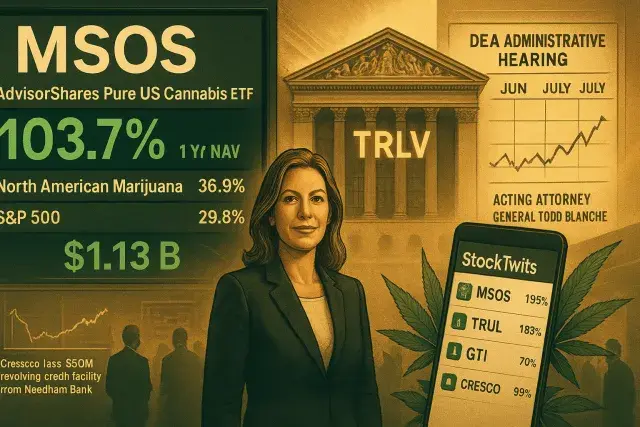

The Drug Enforcement Administration is scheduled to open a formal administrative hearing next month on whether to reclassify cannabis under the federal Controlled Substances Act - and both sides of the debate have already filed notices of intent to participate. For licensed cannabis operators, this is not a distant policy conversation. The outcome would reshape the federal compliance environment, 280E tax exposure, banking access, and the structural economics of every vertically integrated cannabis company operating in the United States.
Who's at the Table - and What That Signals
NORML, the longstanding cannabis legalization advocacy group, and Smart Approaches to Marijuana, which opposes broad legalization, have both formally indicated their intent to participate. That combination tells you something. When opposing advocacy organizations each believe the hearing is worth showing up for, it confirms that the administrative record being built here carries real legal and regulatory weight - this is not a symbolic proceeding.
The hearing is a required step under the Administrative Procedure Act before any final rescheduling rule can take effect. It allows stakeholders - industry groups, medical organizations, law enforcement bodies, researchers, and advocacy groups - to present evidence and testimony. The DEA is not bound by any prior recommendation, and the process can be protracted. Operators who have been banking on rescheduling to deliver near-term 280E relief should understand that the hearing is a milestone, not a finish line.
For multi-state operators and their finance teams, the 280E question alone justifies close attention. Under current federal law, cannabis remains a Schedule I controlled substance, which means cannabis businesses cannot deduct ordinary business expenses - cost of goods sold excepted - from federal taxable income. Reclassification to Schedule III would not eliminate federal oversight, but it would end 280E's application to licensed cannabis businesses, materially improving after-tax cash flow across the sector.
Hemp's Separate Problem: Recriminalization Is Coming
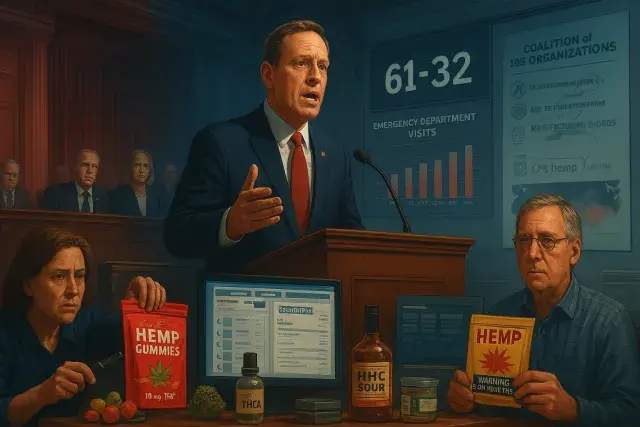
While the rescheduling debate draws most of the attention, the hemp industry is facing a more immediate and arguably more disruptive policy shift. Leaders of the Marijuana Policy Project have stated publicly that they do not expect Congress to reverse the federal recriminalization of certain hemp THC products ahead of its November effective date. Some adjustment to THC limits or specific beverage regulations may occur, but a broad rollback is not anticipated.
That matters for a specific and growing segment of the market. Hemp-derived THC products - including delta-8, delta-9, and other minor cannabinoids in concentrations that fall within the letter of the 2018 Farm Bill - have proliferated in convenience stores, smoke shops, and e-commerce channels that sit entirely outside the licensed dispensary system. When recriminalization takes effect, manufacturers and distributors of those products will face a sharply different legal footing. Supply chains that have operated in a regulatory gray zone will need to restructure or wind down. Retailers carrying hemp-derived intoxicants on open shelves, often with minimal age verification or testing requirements, will face exposure.
The irony here is not subtle: licensed dispensaries - subject to seed-to-sale tracking, mandatory lab testing, compliant packaging, METRC integration, and strict age verification - have competed for years against an unlicensed hemp-derived market operating with far fewer constraints. Recriminalization, if it holds, would reduce some of that structural disadvantage.
State Regulatory Moves Continue Regardless of Federal Outcomes
Federal proceedings move slowly. States, in the meantime, keep adjusting their own frameworks - and the details matter operationally.
Connecticut's governor signed budget legislation that converts the state's cannabis excise tax from a THC-content-based model to a flat 10.75 percent rate. For operators and brands selling in Connecticut, this changes how pricing strategy and wholesale menu structure interact with the tax calculation. A THC-based tax creates incentives to manage potency figures on product labels; a flat excise rate removes that variable from the compliance calculus, which may simplify SKU management and pricing across retail and wholesale channels.
Rhode Island has a new nominee for the Cannabis Control Commission chair, which bears watching for any shift in enforcement posture or licensing pace. Oregon regulators have filed proposed changes to the state's hemp registry application process - relevant for cultivators and processors operating across both hemp and cannabis licenses. Florida is holding a medical cannabis rules workshop, a signal that the regulatory framework there remains in active revision.
Internationally, Nigerian lawmakers are reportedly drafting legislation to legalize cannabis for medical and industrial use. For U.S.-based operators with an eye on emerging regulated markets, African jurisdictions have historically moved slowly from draft legislation to licensed commercial operations - but the direction of travel is consistent with a broader global shift toward regulated frameworks.
Public Companies Take Stock: Reverse Splits and Receivership
The equities picture in cannabis continues to be uneven, to put it plainly. Curaleaf Holdings has announced a one-for-three reverse stock split, stating the move is intended to facilitate uplisting to a U.S. stock exchange. Reverse splits are a standard corporate mechanism to increase per-share price when a stock has traded below exchange listing thresholds - but they don't change the underlying value of the business or its debt structure. For investors and business partners, the more relevant question is whether improved exchange listing access translates into better capital formation and lower cost of capital over time.
TerrAscend Corp. has entered receivership in Michigan over outstanding debts. That's a harder story. Receivership means a court-appointed party takes control of assets to manage creditor claims - it is not automatically a terminal outcome, but it signals that the company's Michigan operations have reached a point where normal commercial resolution wasn't available. For vendors, landlords, wholesale suppliers, and technology partners who work with multi-state operators, this is a reminder that contractual exposure in the cannabis sector still carries elevated counterparty risk, particularly in states where operators have accumulated debt through expansion cycles that predated the current capital-constrained environment.
The DEA hearing, the hemp recriminalization clock, shifting state tax structures, and the financial stress visible in public company filings are not unrelated events. They are different expressions of the same underlying condition: a cannabis industry that has grown enormously within state-regulated systems while remaining in a structurally unresolved position under federal law. Until that resolution arrives - if it does - operators will keep making business decisions under compounding uncertainty. The hearing next month won't end that uncertainty. But it will tell the industry something about how seriously the federal government is treating the question.