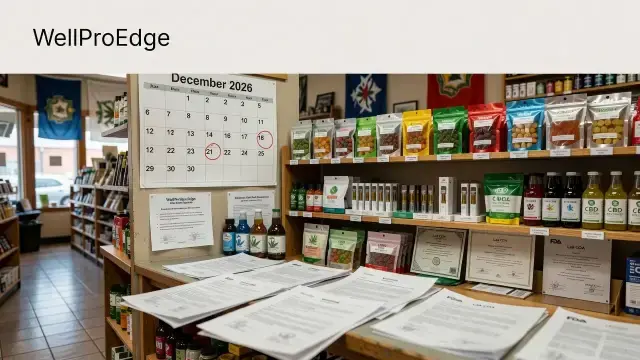
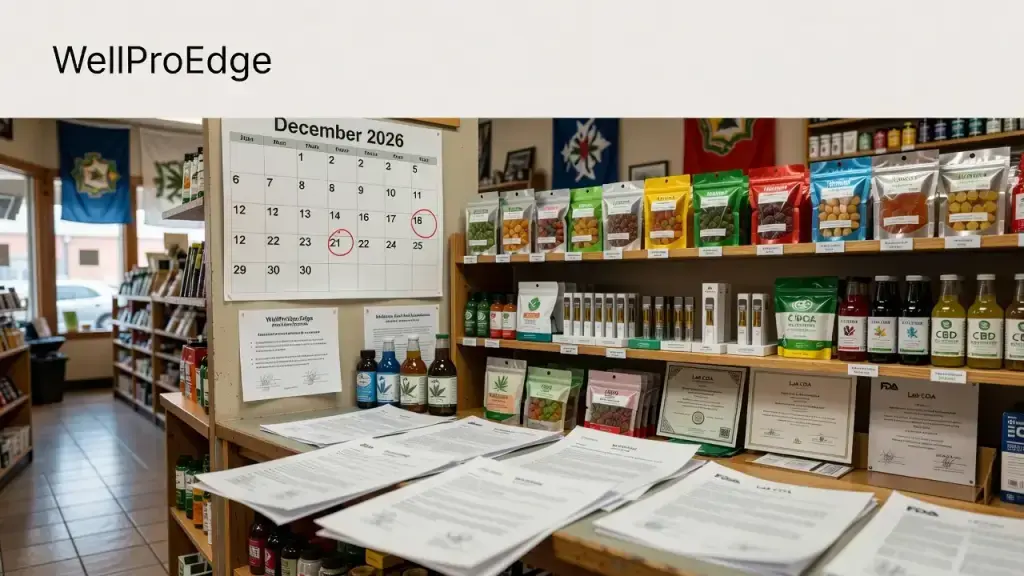
A Mount Pleasant hemp retailer is bracing for a federal rule change that could strip legal status from some of the CBD and THC products currently sitting on its shelves. Javier Camacho, owner of WellProEdge, says the shift has left customers and small operators alike unsure which products will survive past Dec. 11, 2026. The uncertainty traces back to a 2025 federal spending law that redefines what legally counts as hemp - and the definition is about to get a lot narrower.
Why the "Farm Bill loophole" is closing
Under the 2018 Farm Bill, hemp was defined largely by one number: no more than 0.3% delta-9 THC by dry weight. That threshold left room for interpretation, and manufacturers built entire product categories - THC gummies, vapes, infused beverages - around cannabinoids that technically fell outside the delta-9 measurement. Critics called it a loophole. Supporters called it innovation within the letter of the law. Either way, it created a gray-market retail channel that operated with far less oversight than state-licensed dispensaries selling marijuana under the Controlled Substances Act.
The new federal definition closes that gap by broadening the THC calculation beyond delta-9 alone and adding restrictions on finished hemp-derived cannabinoid products. In practice, this means some products that currently pass as compliant hemp will no longer meet the federal bar. Once that happens, they don't just disappear from shelves quietly - they potentially get reclassified as marijuana or THC under federal drug law, which carries a completely different compliance regime, including licensing, testing, and tax treatment.
What this means for small hemp retailers
For a storefront like WellProEdge, the stakes are not abstract. Reclassification could force an inventory overhaul: pulling SKUs, renegotiating wholesale menus with suppliers, and potentially losing access to products that make up a meaningful share of sales. That's a heavier lift for an independent retailer than for a multi-state operator with legal and compliance staff on payroll. Smaller shops tend to run leaner margins and don't always have room to absorb sudden inventory write-downs or rebrand a product line on short notice.
Camacho says he isn't opposed to regulation - he's asking that lawmakers consult the businesses and customers the rule will actually affect before locking in the details. That's a familiar refrain in regulated retail: operators generally accept that oversight is coming, the friction is almost always about process, timeline, and whether anyone asked the people running the compliance logs and POS systems day to day.
The consumer-safety argument behind the rule
Lawmakers pushing for tighter restrictions, including Wisconsin Rep. Jim Piwowarczyk, have pointed to intoxicating hemp products sold with minimal oversight - gummies, vapes, and beverages available even at gas stations - and the risk of access by minors. That's a legitimate retail-compliance concern distinct from the product-safety questions raised separately by federal health regulators.
The FDA has flagged broader safety questions about widely available CBD products, noting that only one CBD medication, Epidiolex, has received federal drug approval, and that for specific seizure disorders. The agency's own research into CBD dosing identified liver-enzyme changes worth further study and has said more safety data is needed at doses reflecting real-world consumer use. None of this amounts to a ban on CBD itself - CBD is generally considered nonintoxicating - but it does mean products combining CBD with THC compounds sit squarely inside the new rule's reach.
What operators should be watching
- Lab testing and COA documentation showing total THC content, not just delta-9, ahead of the December 2026 deadline
- Supplier contracts and wholesale agreements that may need reformulated or discontinued SKUs
- State-level interplay between hemp retail rules and marijuana licensing frameworks, which vary widely and may not align with the new federal standard
- Packaging and labeling compliance, since reclassified products could trigger different disclosure and child-resistant packaging requirements
For now, customers like Matt Otzelberger and Candace Buggs are left guessing which products on the shelf today will still be legal tomorrow. For retailers, that uncertainty is itself a business risk - one that touches inventory planning, supplier relationships, and compliance budgets months before the rule even takes effect.