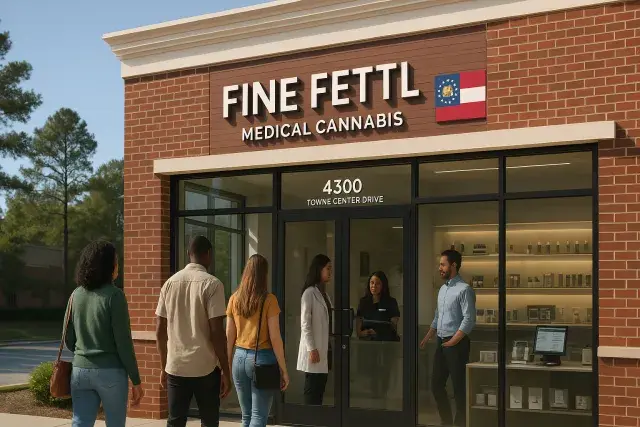
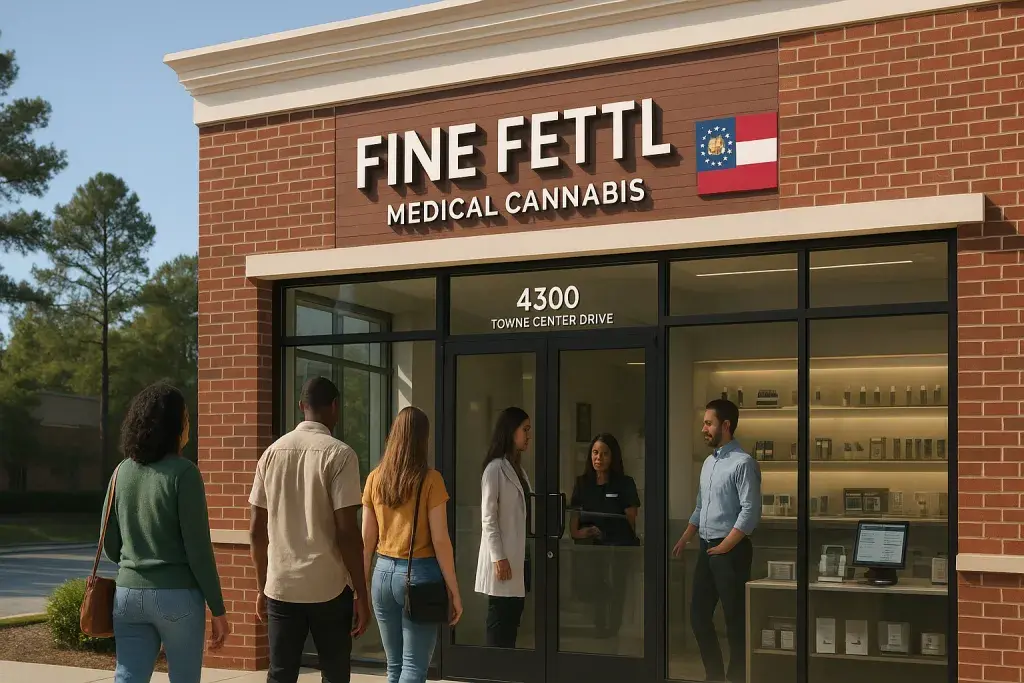
Fine Fettle opened its doors in Evans, Georgia last Friday, marking the latest step in a slow but meaningful expansion of the state's medical cannabis retail footprint. The opening arrives just ahead of a significant regulatory change: a newly passed Georgia bill authorizes licensed dispensaries to sell cannabis flower and vape products beginning July 1, moving the state beyond its long-standing low-THC oil framework. For operators, suppliers, and compliance professionals watching Georgia, the timing matters.
Georgia has operated under one of the more restrictive medical cannabis regimes in the South - limiting dispensary sales to low-THC oil products with a potency ceiling of less than 5% THC. That cap constrained not just patient options but the entire supply chain behind the dispensaries: cultivators, processors, and distributors all shaped their operations around that narrow product window. Expanding into flower and vape SKUs means operators will need to revisit their inventory management workflows, update compliance documentation, and ensure their point-of-sale infrastructure can handle new product categories with different testing, labeling, and verification requirements. A retail platform for licensed dispensaries that isn't built to handle variable potency ranges, product type differentiation, and state-mandated compliance logging will become a liability fast - particularly when regulators are watching a newly expanded product menu closely.
Judson Hill, Fine Fettle's market president in Georgia, noted that the previous low-THC oil products took roughly an hour to produce effects for patients - a product profile that differs substantially from inhalable formats. That shift in product type carries real operational weight. Flower and vaporizer products require distinct compliant packaging standards, different lab testing and COA requirements, and - depending on how Georgia's regulatory guidance develops - potentially separate inventory tracking protocols. Dispensary managers who have only processed oil products will need staff training before July 1. That's not a lot of runway.
A 15-Dispensary State Faces a Product Expansion Without Parallel Infrastructure
Georgia has just 15 licensed medical cannabis dispensaries statewide. That number is low by any measure - states with comparable or smaller populations typically support larger licensed retail networks once they move beyond the earliest phases of a medical program. The limited dispensary count means each location carries significant patient load relative to what a mature market might expect. Evans was specifically identified as an underserved area, which is exactly the kind of geographic access gap that regulators and operators in constrained license-cap environments tend to cite when pushing for program expansion.
For Fine Fettle and any other operator in the state, the transition to flower and vape is not just a product launch. It's a material change to the store's SKU mix, budroom inventory, staff training requirements, and potentially its wholesale sourcing relationships. Processors and cultivators supplying the Georgia market will need to bring new product formats into compliance with state testing standards before those products can move through licensed channels. Supply chain readiness, in other words, is as much a question as retail readiness.
What the Regulatory Shift Means for Compliance and Operations
Dr. Tiffani Forbes, medical director and owner of Better Health Wellness, described the change as moving Georgia from a low-THC state toward a recognized medical cannabis state - one that can offer patients higher milligram options without the sub-5% potency restriction. That's a meaningful distinction from a regulatory classification standpoint, though it's worth being precise: Georgia's program remains medical-only and patient registration through the Department of Public Health is still required for legal purchase.
That registration requirement shapes the entire compliance posture at the point of sale. Dispensary staff must verify patient status before completing any transaction - a process that, in a flower and vape environment, will need to be tightly integrated with age and registry verification workflows. Errors at the register carry licensing consequences. As product variety increases, so does the surface area for compliance gaps.
Operators entering or expanding in Georgia right now face a specific challenge: the regulatory framework around the new product categories is still being operationalized. Guidance issued between now and July 1 will determine exactly what compliant packaging looks like for flower, how potency must be displayed, and what documentation dispensaries must retain. Watching that guidance closely - and building enough lead time to update store procedures before the first flower transaction clears a POS terminal - is the practical work in front of every Georgia operator this month.
The Broader Signal for Southeast Cannabis Retail
Georgia's program expansion is incremental by design. State-level medical cannabis programs in the Southeast have historically moved slowly, with narrow license counts, restricted product menus, and strong regulatory oversight. The shift to flower and vape does not change that fundamental character - but it does represent a policy recognition that low-THC oil alone was an insufficient product framework for a functioning medical program.
For operators in adjacent states - and for multi-state operators evaluating Southeast market entry - Georgia's direction is worth tracking. A controlled, licensed-dispensary model with patient registration requirements and expanding product access represents a particular kind of market: one where volume per location can be meaningful, but where compliance infrastructure needs to be right-sized from day one. There's no adult-use cushion here, no recreational revenue to offset compliance costs. Medical-only math is tighter, and operational discipline at the store level matters proportionally more.
Fine Fettle's Evans location at 4300 Towne Center Drive is one of 15 licensed dispensaries in the state. As of July 1, every one of those 15 stores will be operating under a materially different product authorization than the one they opened under. That's not a minor administrative update. It's a reset of the retail model - and how well operators prepared for it will show quickly.