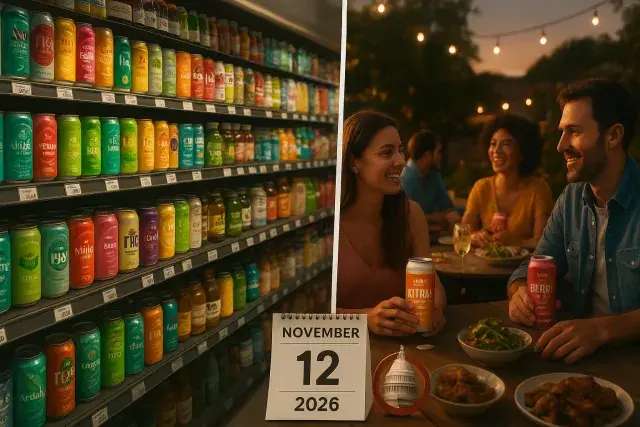
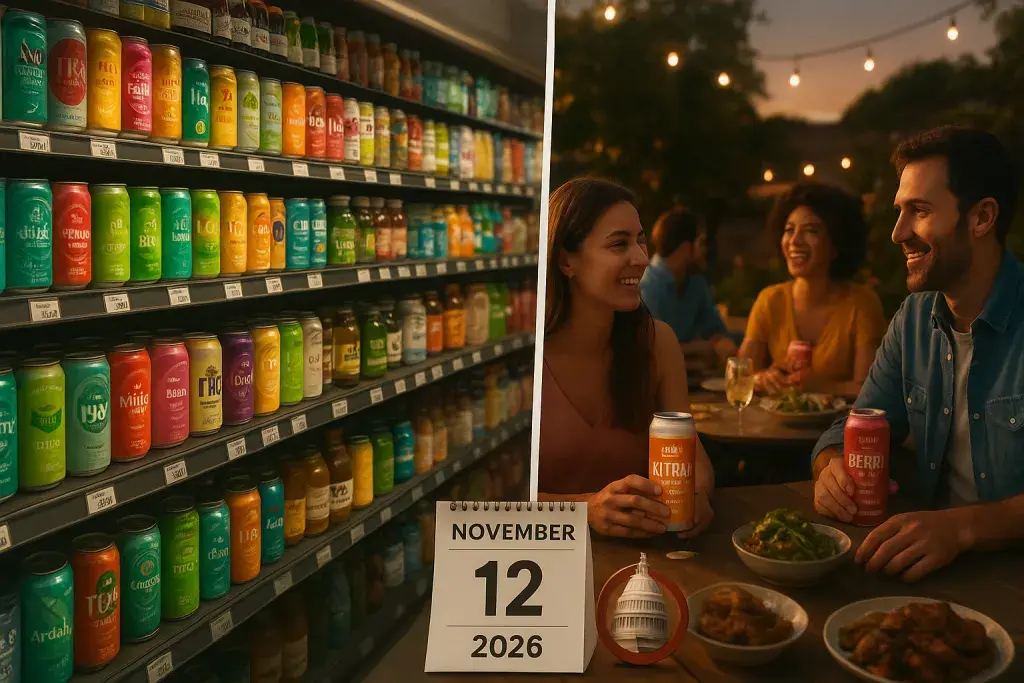
A fast-growing category of hemp-derived THC drinks has moved from specialty cannabis retailers onto mainstream grocery shelves, restaurant menus, and social gatherings - and the federal government is about to draw a hard line around it. Under legislation passed in late 2025, finished hemp products will be capped at 0.4 mg of THC per package when the rule takes effect on November 12, 2026. That threshold is far below the 5 mg to 10 mg per serving already common in many current products, which means operators, retailers, and brands carrying these SKUs face a potential category collapse on a fixed timeline.
For dispensary operators and cannabis-adjacent retailers who have built inventory strategies around THC beverages, the compliance clock is ticking. Those managing product menus through a point-of-sale system that supports compliant SKU tracking and batch-level documentation - like their platform - are better positioned to audit existing stock, flag non-compliant products before the deadline, and manage wholesale purchasing accordingly. Retailers who treat beverage SKUs like any other product line without distinguishing hemp-derived THC from state-licensed adult-use inventory may find themselves holding unmarketable stock when the rule kicks in.
The broader market context matters here. According to research firm Euromonitor data cited in AFP reporting, the U.S. cannabis beverage segment grew from roughly $238 million in 2023 to approximately $720 million in 2025, with projections putting retail sales past $1 billion in 2026 - right around the same time the new THC cap would take effect. The legal framework that enabled this growth was the 2018 federal hemp law, which broadly legalized hemp-derived products. What followed was a regulatory gap: producers found they could legally extract and concentrate THC from hemp, add it to beverages at functionally intoxicating doses, and sell those products in states where traditional cannabis remains restricted. The category grew precisely because it occupied an unregulated middle ground.
Why the Regulatory Gap Opened - and Why It's Now Closing
The 2018 hemp provisions were written with non-intoxicating products in mind - fiber, seed oil, CBD supplements, food ingredients. The language did not anticipate a market where refinement techniques could produce beverages that functionally deliver a psychoactive effect comparable to a light dose of traditional cannabis. Entrepreneurs moved faster than regulators, and within a few years, THC-infused seltzers and tonics were appearing in states that had no adult-use cannabis program and no consumer safety infrastructure designed for intoxicating products.
That is the crux of the regulatory problem: these products reached consumers without the guardrails that licensed adult-use retailers are legally required to maintain. In most state-licensed dispensaries, adult-use sales require age verification at the point of sale, compliant packaging with child-resistant closures and potency disclosures, lab testing with a certificate of analysis on file, seed-to-sale tracking through systems like METRC, and staff trained on dosing guidance. Hemp-derived THC beverages sold through general grocery or convenience retail carried none of those requirements in most jurisdictions. No mandatory age gate. No standardized potency labeling. No compliance log tied to a state regulatory framework.
Health authorities have flagged accidental ingestion by children as one of the primary concerns - a serious point, given that some THC beverages are packaged in formats nearly indistinguishable from non-intoxicating drinks. Unlike smoked or vaporized cannabis, ingestible THC products have a delayed onset effect, which means a consumer who doesn't feel an effect within the expected window may take an additional dose before the first has fully metabolized. That unpredictability is compounded when there is no budtender consultation, no state-mandated dosing guidance, and no required warning beyond what a brand chooses to print voluntarily.
What the New Potency Cap Means for Operators in Practice
The 0.4 mg per package limit is not a modest regulatory adjustment. It effectively renders the current commercial beverage format - typically 5 mg to 10 mg per serving, sometimes 10 mg across the full container - legally non-viable under federal law. Brands selling hemp-derived THC drinks today would need to reformulate entirely, repackage, or exit the market.
Industry groups representing restaurant, beverage, and cannabis interests are already lobbying for a revised framework rather than an outright cap. Their argument is pragmatic: the products exist, consumers are buying them, and a blanket restriction without an alternative regulatory pathway pushes the market back into less visible channels rather than eliminating demand. What they are pushing for looks closer to an alcohol-style compliance model - defined potency limits per serving, age-restricted point of sale, mandatory labeling, standardized warnings, and enforceable quality control tied to testing requirements. Whether Congress responds before November 2026 is an open question.
For multi-state operators and retailers who have expanded into hemp-derived THC products as a complement to their licensed adult-use or medical cannabis programs, the stakes are real. Wholesale purchasing decisions made today may result in unsellable inventory if the law holds. Any brand relationship built around current-dose hemp beverages requires a contingency plan. The prudent move, operationally, is to treat November 2026 as a hard stop, audit beverage inventory separately from licensed cannabis product, and watch the lobbying outcome closely - without betting the category on a regulatory reprieve that may not arrive in time.
The Consumer Shift Behind the Category - and What It Signals for the Industry
The market growth of THC beverages is not incidental. It is, in part, a product of a measurable decline in alcohol consumption. A 2025 Gallup survey found that only 54 percent of Americans reported drinking alcohol - the lowest figure since the polling organization began tracking the question in 1939. Consumers who are stepping back from alcohol are not necessarily stepping away from social drinking rituals; they are looking for alternatives that fit the same context. THC beverages have been positioned to fill exactly that space.
That consumer shift has implications for cannabis retailers beyond the beverage category itself. It suggests a growing population of prospective cannabis consumers who do not self-identify as cannabis users in the traditional sense - people who would not walk into a dispensary but would pick up a THC drink off a shelf at a grocery store or crack one open at a cookout. Reaching that consumer through licensed retail requires thinking carefully about store format, staff training, and product presentation. A dispensary floor optimized for experienced consumers may not convert someone approaching cannabis through the alcohol-replacement lens.
The thing is, THC beverages have done something the broader cannabis industry has been trying to do for years: normalize cannabis consumption in a social context that doesn't require a cannabis-specific identity. That is commercially significant. Whether the legal framework allows the category to continue in its current form or forces a significant reformulation, the consumer behavior it reflects is not going away. Operators who track that behavior carefully - and build their product mix accordingly - will be better prepared for whatever regulatory shape this category takes next.