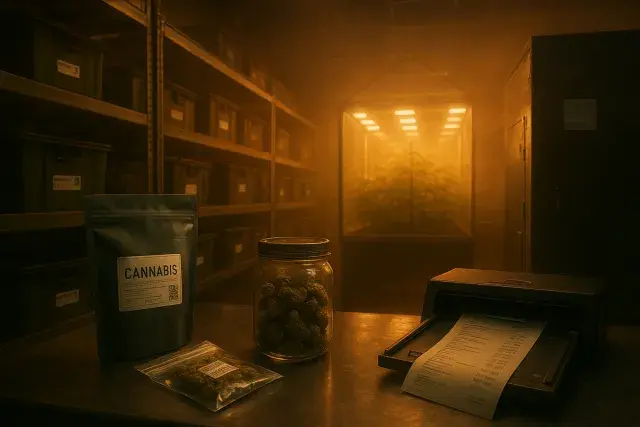
A dispensary's point-of-sale terminal says one thing. The state's track-and-trace system says another. Somewhere between them sits a warehouse full of product that has to match both records, or someone is making a call to a compliance officer. This is the unglamorous problem that Blaine Hatab built a company around, and it is also the problem that quietly determines whether a licensed cannabis operator stays licensed.
From Sales Tool to System of Record
Distru, the company Hatab co-founded in 2016, started small: a CRM for distribution sales reps trying to track who bought what. That is a modest ambition in an industry that talks a lot about vertical integration and platform plays. But the modesty was the point. Operators using the tool kept describing adjacent headaches - inventory that did not reconcile, manufacturing records that lagged behind actual production, orders that touched compliance logs nobody had time to update by hand. The product expanded because the workflow demanded it, not because of a roadmap drawn up in a boardroom. What began as a sales map became a seed-to-sale ERP handling inventory, production, and the integrations that keep commercial data aligned with regulatory reporting.
That expansion mirrors something true across cannabis retail generally: software built for one narrow job in this industry rarely stays narrow for long, because every function - sales, fulfillment, compliance - is downstream of the same inventory ledger.
Why Two-Way Integration Matters More Than It Sounds
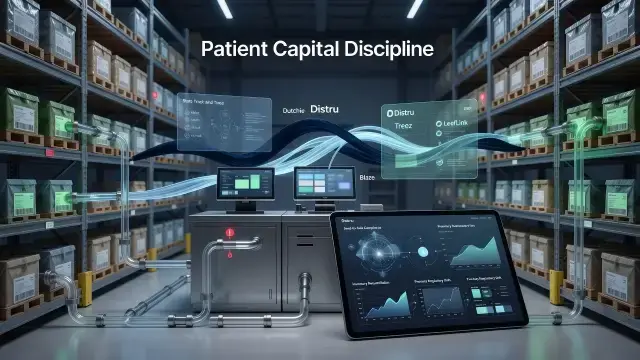
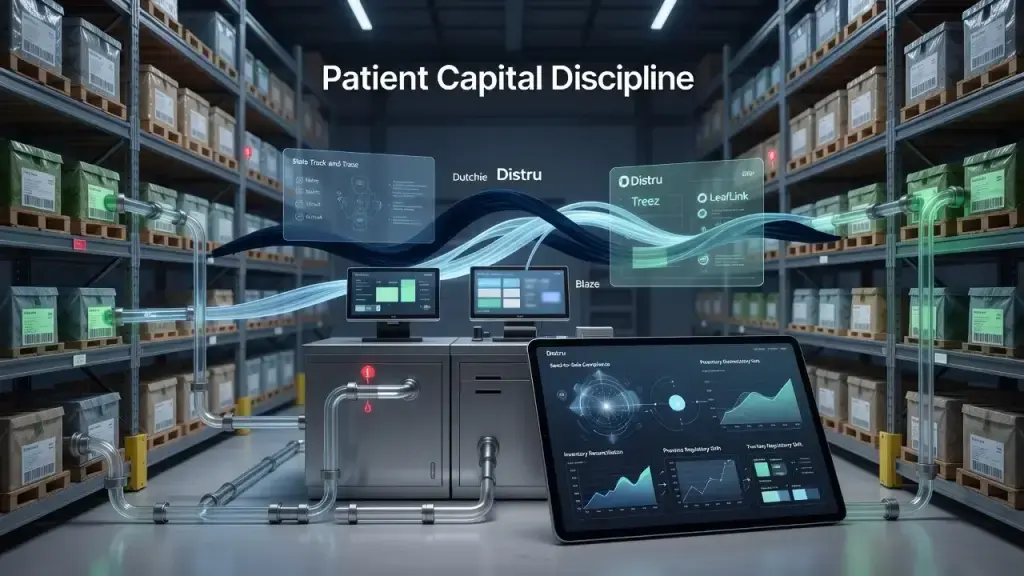
Here's the catch with regulated inventory: ordinary retail software can tolerate small discrepancies. A cannabis operator cannot. State-facing systems like Metrc and BioTrack exist to track every gram from cultivation to sale, and an internal system that disagrees with them is not a cosmetic problem - it is a compliance exposure. Add retail and wholesale platforms like Dutchie, Treez, Blaze, and LeafLink into the mix, and you have multiple systems that each need to agree with each other and with the state database. Every connection point is a place where records can quietly drift apart, and drift is exactly what regulators are trained to notice during an audit.
Distru's bet was that two-way integration needed to function as core infrastructure rather than a bolt-on feature - not just pushing data downstream, but keeping the operational record coherent across an entire supply chain. That is a less visible kind of value than a flashy dashboard, but it is the kind that keeps a multi-state operator out of regulatory trouble.
Patient Capital in an Impatient Industry
Distru's funding story is notable mainly for what it avoided. A $3 million seed round in 2019 was followed by more than five years without another institutional raise - an unusual gap in a sector where plenty of vendors chase funding rounds to project momentum. The company reportedly prioritized growth and profitability instead, eventually raising a Series A led by an investor with deep cannabis-sector experience. In practice, though, the more interesting detail isn't the dollar figures; it's the discipline of building toward the operator's actual workflow before building toward the next pitch deck.
What This Means for Operators and Vendors
For dispensary owners and multi-state operators, the lesson is structural: reconciliation isn't a back-office nuisance, it's the operational spine of a compliant business. A mismatch between a production record and a track-and-trace filing can trigger inventory shrinkage questions, delay a delivery manifest, or draw regulatory scrutiny that costs far more than the software meant to prevent it. For software vendors watching this space, the pattern is instructive too: cannabis operators don't want more disconnected point solutions. They want fewer systems that actually talk to each other, because every integration gap is a place where a compliance log and a budroom shelf stop agreeing on reality.