Missouri's Nov. 12 ban on intoxicating hemp products may get a partial reprieve for beverage makers, but only if Congress finishes what it started over the weekend. The U.S. Senate approved a short-term funding measure early Saturday that would push the federal ban on intoxicating hemp THC products to Dec. 11, and the bill's fate now rests with the House and, eventually, the president's signature. For hemp retailers already bracing for empty shelves, the timing is everything.
The mechanics here matter for anyone running a hemp storefront or a multi-category retail operation in the state. Missouri's law, signed by Gov. Mike Kehoe this spring, was built to mirror the federal ban Congress passed last year - but state lawmakers added a narrow carve-out. If Congress delays the federal deadline, Missouri's own ban still takes effect on schedule for everything except intoxicating beverages. That's an unusual bit of statutory drafting, and it puts beverage producers in a different compliance lane than edible, tincture, or vape manufacturers who share the same supply chain. Retailers managing SKU-level inventory across categories will need updated compliance logs and point-of-sale rules that reflect this split, not a blanket policy - the kind of granular category management that platforms offering dispensary software in South Dakota and other regulated markets have had to build into their systems as state and federal timelines diverge. dispensary software in South Dakota
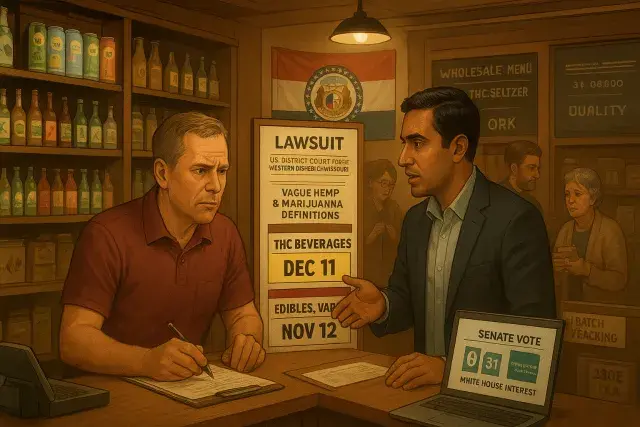
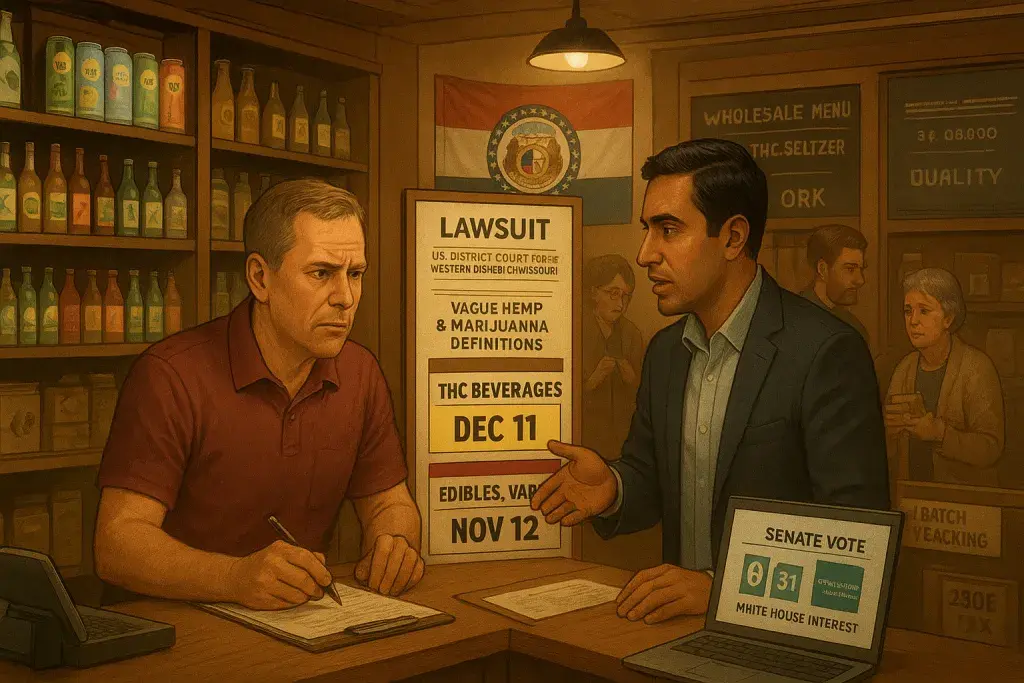
Jay Patel, president of the Missouri Hemp Trade Association, called the 61-31 Senate vote a "good sign," noting bipartisan support for the delay and White House interest in eventual federal regulation. Fair enough - but as Patel himself pointed out, a federal pause doesn't fix Missouri's underlying legal fight. The association and a coalition of hemp businesses filed suit last month in the U.S. District Court for the Western District of Missouri, arguing the state's definitions of hemp and marijuana are unconstitutionally vague. That litigation runs on its own clock, independent of whatever Washington does before Dec. 11.
What This Means for Store Shelves and Wholesale Menus
For operators like John Grady, co-owner of Slaphappy Hemporium in Rosebud, the practical impact is split down the middle. His shop's THC seltzers, if the delay holds, could keep moving through wholesale menus and retail coolers into December. Everything else - edibles chief among them - faces the Nov. 12 cutoff regardless of what happens in Congress. "We started off as a beverage producer," Grady said, "So for us, that is a good thing, but it also hurts the whole other part of our business." That's the tension facing hemp retailers statewide: a partial reprieve that helps one product category while leaving inventory shrinkage and lost revenue on the table for others.
The Compliance Clock Keeps Running
In practice, this means store operators can't simply wait and see. Batch tracking, COA verification, and compliant packaging standards still apply to whatever remains sellable after Nov. 12, and any beverage products staying on shelves need airtight documentation showing they meet the narrow exception carved into state law. Retailers should also expect customers to stock up on soon-to-be-banned items - a predictable but temporary bump that doesn't offset the longer-term disruption to product lines, wholesale contracts, and tax planning under 280E-adjacent state rules. Grady and others involved in trade organizations are pushing to use the federal delay window to secure comprehensive regulation before December, rather than face another round of last-minute scrambling.