
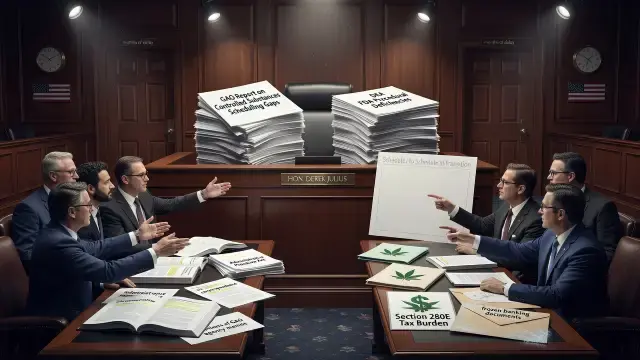
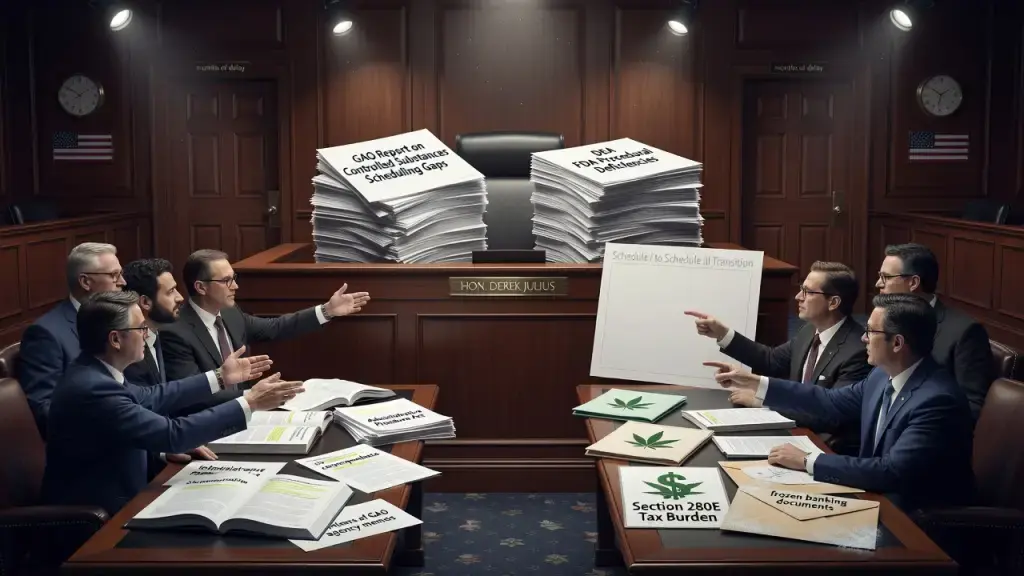
The Drug Enforcement Administration is telling its own chief administrative law judge to shut the door on further testimony and discovery in the marijuana rescheduling proceeding, even as it agrees to let a critical watchdog report enter the hearing record. The dispute centers on a Government Accountability Office review that found DEA and the Food and Drug Administration lack documented procedures for evaluating controlled substances. For an industry that has waited years for a scheduling decision, this procedural fight is now the thing standing between a recommendation and more delay.
What the GAO Report Actually Found - and Why It Matters
The GAO review, released last month, identified what it called "gaps" in the federal process for scheduling drugs. Specifically, it found DEA has no formal policies or procedures governing how staff conduct evaluations or schedule substances, and that FDA within HHS has no comparable written procedures for developing scheduling recommendations. That is not a finding about marijuana's pharmacology. It is a finding about paperwork - or the absence of it. DEA has seized on that distinction in its briefs, arguing the report exposes gaps in how the process was memorialized, not flaws in the rescheduling analysis itself. Rescheduling opponents see it differently, arguing that an admitted absence of standards is itself the material fact, not something that can be waved away as immaterial.
A Fight Over Discovery, Not Just a Document
DEA's objection isn't really about whether the GAO report gets into the record - the agency says it's fine with that. The real fight is over what opponents want to do next: depose witnesses, demand broad categories of internal materials, and pause the proceeding while they chase down six years of GAO correspondence with every agency it contacted. DEA calls this an "obvious fishing expedition," and points to a basic principle of administrative law - once testimony has closed, the Administrative Procedure Act doesn't allow open-ended record supplementation just because a party disagrees with the government's conclusions. To reopen discovery, movants generally have to show the agency withheld adverse documents, that background information is needed to assess whether relevant factors were considered, or that the agency's reasoning is too opaque for judicial review. DEA argues none of those thresholds has been met here.
Why This Matters Beyond the Hearing Room
For operators, investors, and compliance teams who have been tracking this process since the Schedule III recommendation first emerged from HHS, the procedural wrangling is not a sideshow - it is the mechanism that determines when, or whether, a final recommendation reaches the DEA Administrator. Every month of additional briefing or discovery is a month longer that cannabis businesses continue operating under Schedule I's harshest constraints, including the Section 280E tax burden that disallows ordinary business deductions and continues to squeeze margins at the dispensary and multi-state operator level. It also keeps banking relationships, interstate commerce questions, and research access frozen in place. The hearing already excluded reform supporters as designated participants, a point that drew criticism when proceedings opened, and the current dispute shows the process remains contentious even among the parties DEA did allow to the table.
What Comes Next
Judge Derek Julius still hasn't ruled on whether the GAO report becomes part of the formal record, let alone whether he'll order the narrower reopening opponents are requesting - limited document requests and testimony tied specifically to the process gaps GAO identified. DEA's position is that the report "is clear on its face" and doesn't create a factual dispute requiring new evidence. Opponents counter that an acknowledged absence of policy can't simultaneously be treated as inconsequential. Until Julius rules, the broader question - whether marijuana moves from Schedule I to Schedule III - remains on hold, which means the compliance, tax, and banking status quo for licensed cannabis businesses holds too.


