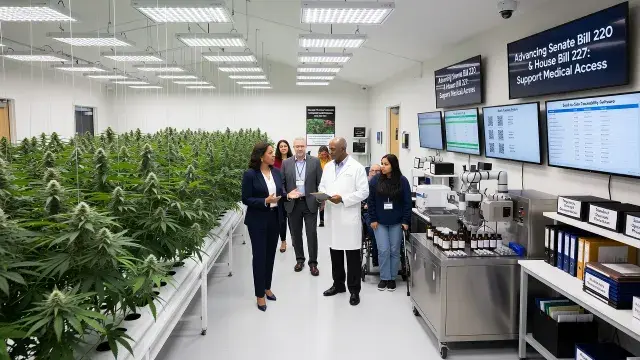
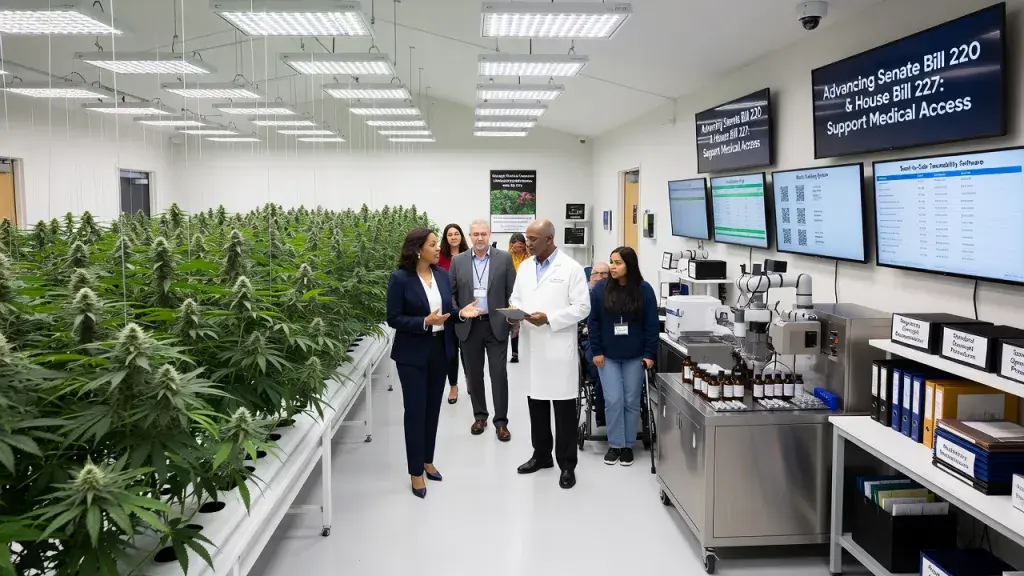
A Macon-based medical cannabis operator invited state lawmakers, physicians, and patients through its production facility this month, betting that firsthand exposure to a licensed grow-and-manufacture operation might do what years of committee testimony hasn't: move stalled legislation. Georgia legalized medical cannabis a decade ago, yet advocates say the program remains narrow, and recent bills meant to widen it have repeatedly died in the chambers.
Georgia Fine Fettle, the Macon operation that hosted the tour, is one of just three licensed medical cannabis producers in the state, a tight cap that shapes nearly everything about how the program functions. Limited licensing means limited supply chain redundancy - fewer growers, fewer manufacturers, fewer points where product can move from cultivation to dispensary shelves. That scarcity has downstream effects on operators nationally who watch state license caps closely, since the same compliance infrastructure that governs seed-to-sale tracking in Georgia mirrors systems used elsewhere, including states running on a cannabis software platform arizona operators rely on for METRC reporting and inventory reconciliation. The logic is the same everywhere: fewer licenses, tighter oversight, and a heavier compliance burden on each operator still standing. cannabis software platform arizona
Why Access Bills Keep Stalling
Senate Bill 220 and House Bill 227, the two most recent attempts to expand Georgia's medical cannabis program, both stalled before reaching a floor vote. Both would have made it easier for patients to qualify for a medical cannabis card and would have updated allowable product forms - a change aimed at giving physicians more flexibility in what they can recommend. That sounds like a modest administrative fix on paper, but in practice, product-form restrictions determine whether a state's program can actually serve its patient population. A tightly limited list of approved forms - tinctures and capsules but not certain concentrates, for instance - can leave a meaningful share of patients without an effective option, regardless of how many dispensaries exist on paper.
What Operators and Regulators Are Watching
State Representative Anissa Jones, who joined the facility tour, said seeing the cultivation and manufacturing process firsthand changed her understanding of how controlled the program actually is - not, as she put it, people "growing stuff wild in nature," but a regulated production chain built for batch consistency. That distinction matters for lawmakers weighing expansion, because consistency and traceability are the backbone of any credible medical cannabis system. Every batch move, every transfer to a dispensary, every unit sold needs a compliance log behind it; without that infrastructure, an expanded program risks the kind of gaps that erode both patient safety and regulatory trust.
Dr. Elmore Alexander, who also took part in the tour, raised a narrower but pointed concern: current product offerings adequately serve roughly 80% of patients, in his estimation, but the remaining share needs additional formulations the state hasn't yet approved. For operators, that gap represents both a compliance question and a market signal - a program that can't serve its full patient base is a program that will keep facing pressure to expand, one legislative session at a time.
The Business Stakes of a Narrow Program
- Only three licensed medical cannabis operators currently serve the entire state, limiting wholesale supply and dispensary product variety.
- Stalled bills like SB 220 and HB 227 leave patient card access and approved product forms unchanged for now.
- Compliance and traceability infrastructure - the kind demonstrated on facility tours - remains central to any future expansion lawmakers might approve.
Whether Georgia's legislature moves on expansion next session or shelves it again, the underlying tension won't go away. A program with three operators and a restricted product list can only stretch so far, and every stalled bill is, in effect, a decision to keep it stretched thin.