Missouri's regulated cannabis stores appear to be capturing the overwhelming majority of consumer spending, according to a new state-commissioned study. But the finding, released October 15 by the Missouri Division of Cannabis Regulation, comes wrapped in enough methodological fine print that operators and policymakers should resist treating it as the final word on licensing policy.
What the number actually measures
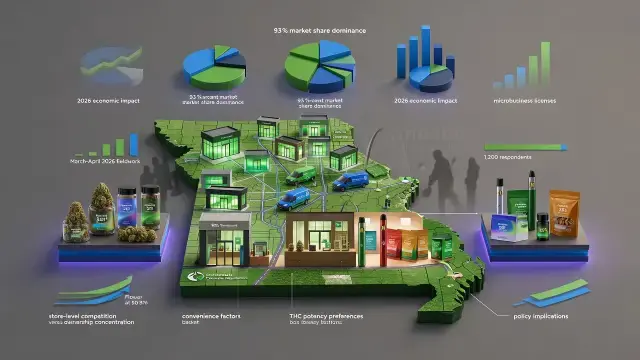
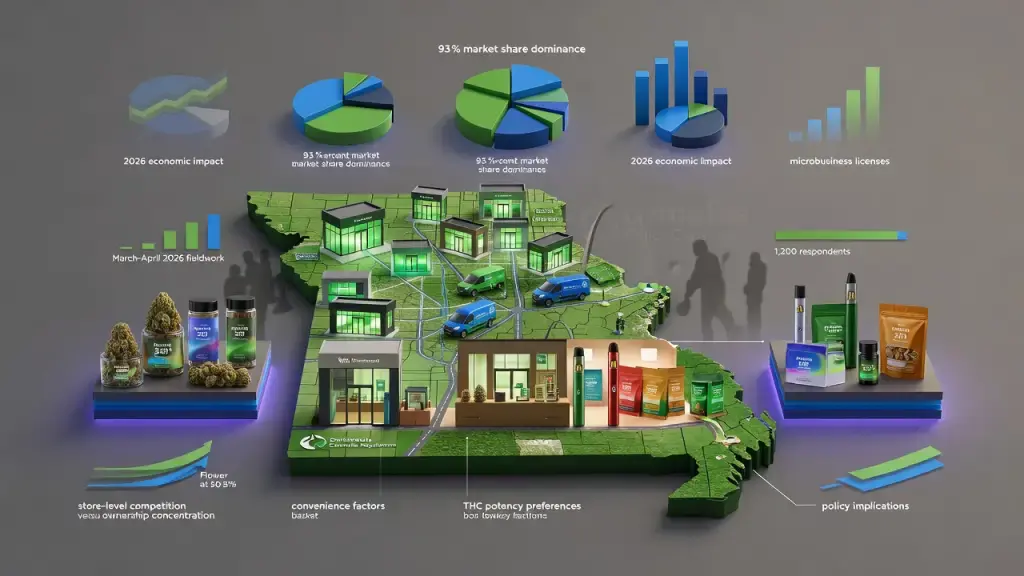
The Phase 1 Missouri Cannabis Market Study, conducted by Cannabis Public Policy Consulting, estimates that licensed dispensaries and delivery services accounted for roughly 93% of reported cannabis expenditures among adults who had used cannabis in the prior 30 days. That's a strong figure for a regulated market still working out licensing structure. But the word "reported" is doing real work here. This is survey-based research cross-checked against administrative sales data - not a transaction-by-transaction audit of every legal and illicit purchase in the state.
Fieldwork ran from March 16 through April 3, 2026, drawing from 1,200 adult respondents, with a cleaned analytic sample of 1,033. The October release date is a publication timestamp, not a reflection of when the underlying consumer behavior was captured. Anyone benchmarking this figure against more recent retail trends should keep that gap in mind.
There's also a distinction worth sitting with: dollars spent is not the same metric as number of transactions, volume of product, or share of consumers who ever set foot in a licensed store. A single shopper can draw from multiple sources. Product bought legally can later move through informal channels without another point-of-sale record. A market-share claim needs a clearly defined denominator, and this one is spending among active, self-reported consumers - not the entire cannabis-using population of the state.
Flower leads the basket, but averages hide variation
MJBizDaily's October 20 coverage drew out the consumer-facing detail: flower represented close to half of reported monthly spending, with vapes and edibles trailing behind. Average monthly spending across all sources came in at $161.81. Price, THC potency, and convenience ranked as the leading purchase considerations.
That average describes the surveyed population - it is not a budget recommendation, and a stated preference for higher potency products doesn't establish that stronger THC content suits every consumer. For retail operators, the more useful takeaway is about assortment and merchandising: flower still anchors budroom inventory and SKU planning, even as vape and edible categories compete for shelf space and wholesale menu attention.
A statewide average also flattens real differences in access. A consumer with three dispensaries within a short drive experiences "convenience" very differently than someone facing a long trip to the nearest licensed storefront. The policy question isn't whether aggregate legal spending looks healthy - it's whether store density, product selection, and pricing actually work for the people currently buying.
Store counts aren't the same as ownership counts
The state's announcement noted that sales were not excessively concentrated among individual retail locations, which is a reasonable sign of competitive distribution at the storefront level. But the agency was explicit that the study did not examine ownership structure, and that gap matters. Multiple dispensary locations can sit under common ownership through vertical integration or multi-license operators, meaning a healthy count of competing storefronts doesn't necessarily translate into a healthy count of independent businesses.
That's a meaningful distinction for anyone evaluating whether Missouri's licensing framework serves smaller operators or social equity applicants. Evidence of distributed sales across locations answers one question. It says nothing about whether a handful of corporate entities control much of the market behind the scenes. The regulator has committed to examining ownership data in future research, along with the effects of ongoing state and federal policy changes and the rollout of additional microbusiness licenses.
- Spending share reflects dollars reported by active consumers, not total legal or illicit volume
- Store-level competition data does not capture cross-ownership among retail locations
- A second, broader economic-impact report is planned later in 2026
Why this matters beyond the headline figure
The agency said the findings do not establish a present need for additional dispensary licenses - a conclusion that will shape near-term licensing debate in the state. Fair enough, based on what this phase measured. But a high licensed-spending share among existing consumers doesn't resolve whether potential consumers in underserved areas have reasonable access, or whether smaller and social equity license holders can compete against larger, better-capitalized operators.
For dispensary owners and multi-state operators watching Missouri, the practical lesson is less about the 93% figure and more about reading market research with discipline: know the survey window, know whether a percentage reflects dollars or transactions, and know whether competition is being measured by storefronts or by the companies that actually own them. Missouri's regulator has signaled it plans to keep refining the picture. The current study is a useful snapshot - not a closing argument.