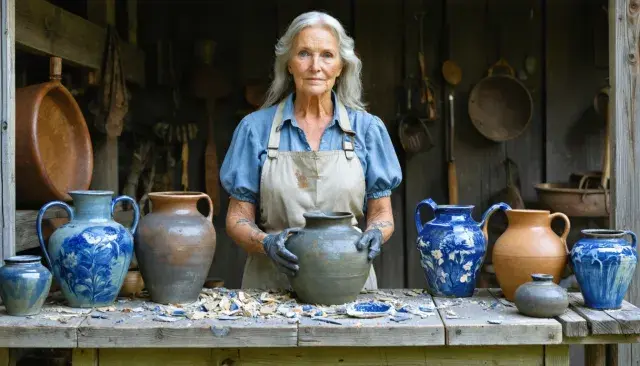
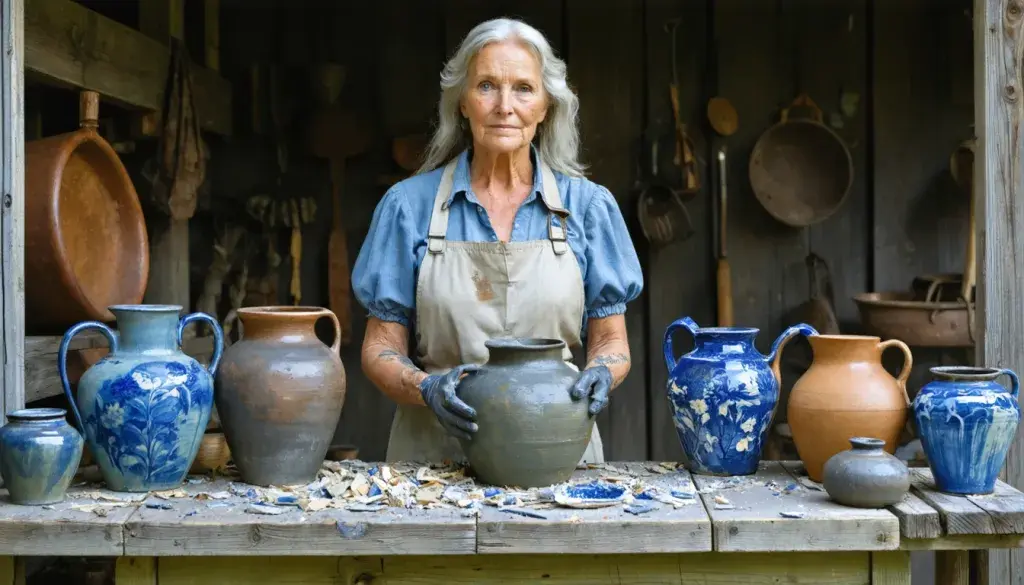
In the late 1800s, South Carolina farmwoman Arabella Walker created five striking jars and pitchers by pressing broken china shards into gray creek-bottom clay. These memory jugs, now revered artifacts, capture Victorian-era creativity and personal storytelling, offering a window into Southern folk art traditions that blended mourning customs with domestic hobbies.
Arabella's Unique Creations and Family Legacy
Walker gathered discarded china fragments from behind her farmhouse, embedding them into handmade stoneware for textured, mosaic-like surfaces. One standout piece, a turn-of-the-century vase, features a glass-backed design with a hanging hole, diverging from standard memory jugs. A descendant later recreated the craft using the same creek clay and local arrowheads, underscoring its enduring family appeal.
- Materials: Broken china, toys, coins, nuts, bolts—anything evocative of memories.
- Distinctive trait: Items merely pressed in, often leaving imprints when they fall off over time.
- Survival challenge: Many dismissed as trash, like a 1980s auctioneer's quip about stripping off the "conglomeration."
Roots in Southern Culture and Victorian Trends
Memory jugs originated as African American grave decorations before entering Southern homes, possibly via 1870s-1890s instructions in Godey's Lady's Book. Peaking during the late 19th and early 20th centuries, they mirrored Victorian scrapbooking obsessions and newfound leisure for women amid household innovations. While centered in the Deep South, examples surfaced in Baltimore by the early 1900s, signaling cultural spread.
Historian Dr. Rodger Stroup, a South Carolina curator, notes evolving scholarship: from death-focused rituals to versatile crafts. His 1980s State Museum exhibit on funeral customs highlighted their role, building on Elaine Nichols' research into African American traditions.
Decoding Secrets and Collecting Today
Dating relies on embedded clues like dated coins or tokens—e.g., a 1887-engraved piece or 1922 bus token. Stroup cherishes "ghost" imprints, such as vanished toy horses evoking family scenes. Despite scarcity, eBay and auctions yield finds, though provenance often eludes dealers.
- Expert tip: Seek pre-1900 examples; later ones feature Cracker Jack prizes.
- Modern echo: Online tutorials and exhibits at places like Winston-Salem's Diggs Gallery revive the form.
These jugs connect personal loss to communal creativity, enriching understanding of overlooked Southern heritage amid growing interest in folk art preservation.