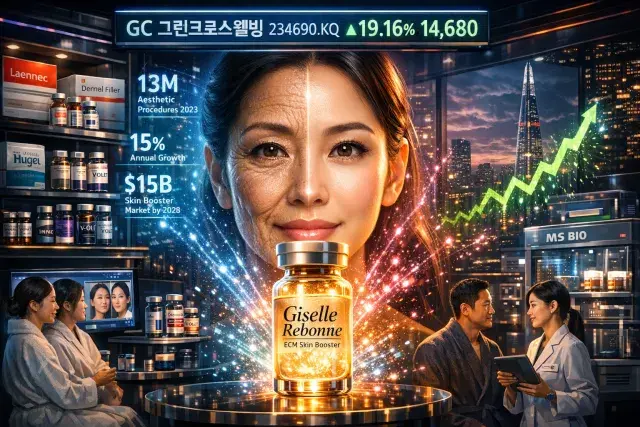
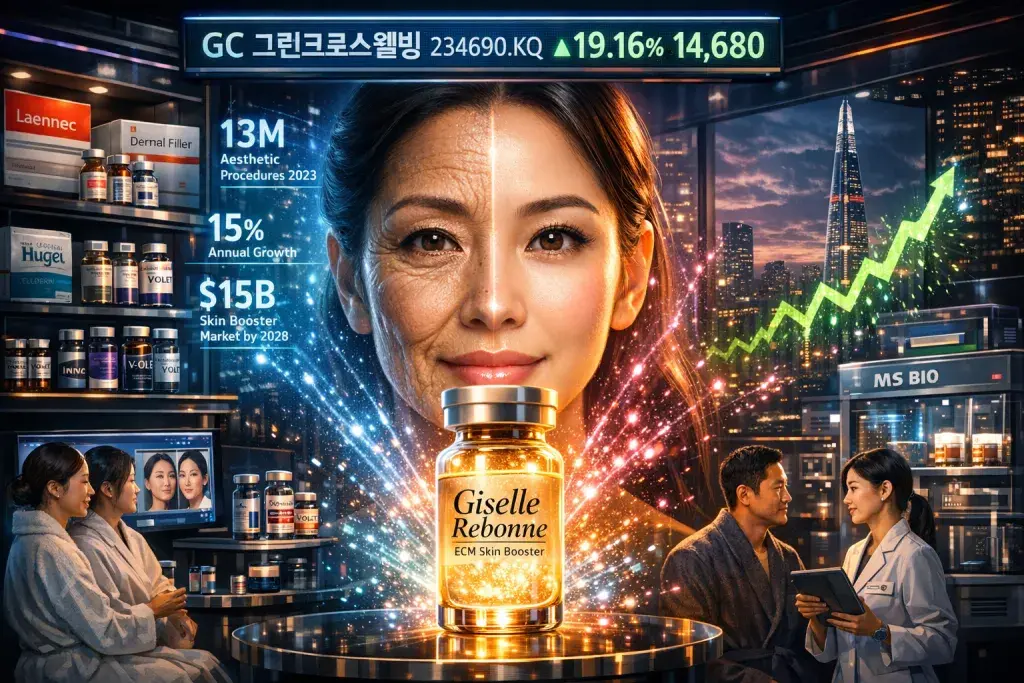
On July 25, shares of GC Green Cross Wellbeing (234690.KQ) rocketed 19.16% to close at 14,680 won, fueled by the announcement of its new human tissue-based extracellular matrix (ECM) skin booster, Giselle Rebonne. This leap underscores surging investor enthusiasm for advanced regenerative aesthetics in South Korea's booming med-spa market.
Giselle Rebonne: A Next-Generation Skin Booster
Giselle Rebonne represents a leap forward in skin rejuvenation, leveraging human acellular dermal matrix (hADM) derived from human tissue. Unlike traditional boosters that merely stimulate collagen indirectly, this ECM product delivers the actual extracellular matrix structure, fostering direct tissue remodeling and structural restoration for deeper regenerative effects.
- Processed by MS Bio's proprietary decellularization to eliminate cells and immune triggers, ensuring high biocompatibility.
- GC Green Cross Wellbeing supplies raw materials via its Eumseong tissue bank, minimizing rejection risks and inflammation.
- Positioned as a "fundamental regenerator," it targets aging skin's core architecture amid rising demand for natural, biocompatible treatments.
Strategic Portfolio Expansion
The launch bolsters GC Green Cross Wellbeing's aesthetic lineup, now spanning placenta injections like Laennec, dermal fillers, skin boosters, and botulinum toxin Innovo. This mirrors competitors' moves: Hugel partners with Hans Biomed on Cellrderm, while CG Bio eyes bundled sales with Daewoong's Nabota and V-Olet, signaling a shift toward comprehensive regenerative portfolios.
South Korea's K-beauty dominance, fueled by innovations in biomaterials, drives this trend. Global aesthetic procedures hit 13 million in 2023, with non-invasive options like boosters growing 15% annually, per industry data, as consumers prioritize long-term skin health over quick fixes.
Market Surge and Future Outlook
The 2,360-won gain reflects confidence in ECM's edge over hyaluronic acid-based rivals, tapping into wellness trends where patients seek human-derived solutions mimicking natural repair. Yet challenges loom: regulatory scrutiny on tissue products and competition could temper gains.
Looking ahead, expect GC Green Cross Wellbeing to capture share in the $15 billion global skin booster market by 2028, propelled by Asia's anti-aging boom and telemedicine integration. This positions the firm as a regenerative aesthetics leader, blending biotech precision with lifestyle enhancement.