
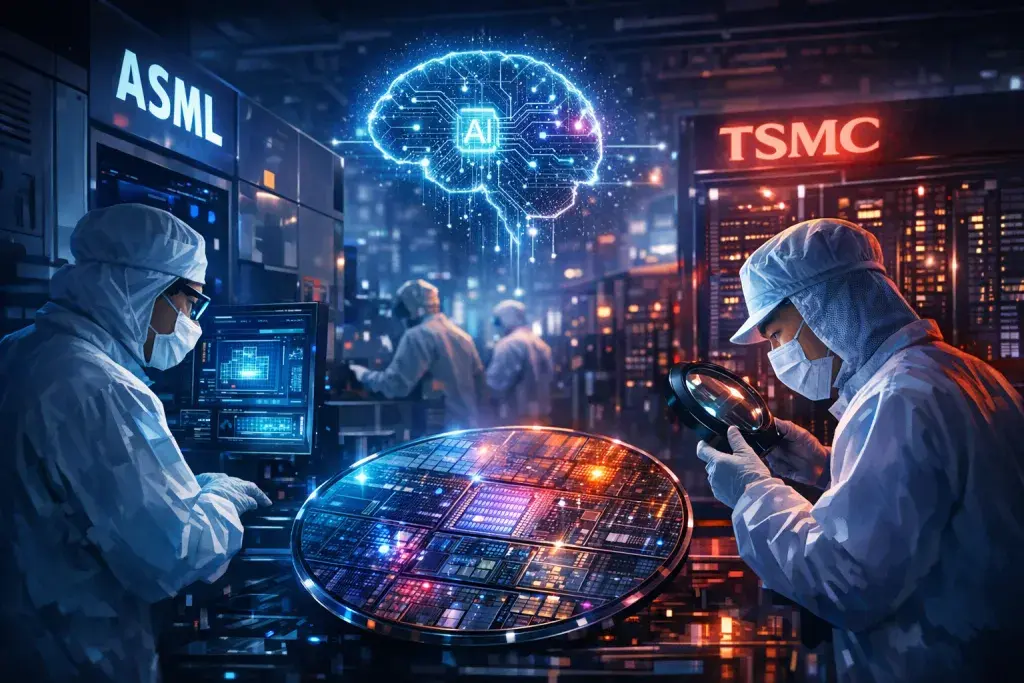
Chip equipment leader ASML has lifted its 2026 sales forecast, citing stronger-than-expected first-quarter results driven by AI demand. Taiwan Semiconductor, the top contract manufacturer, posted a 35% revenue jump in the same period, underscoring the sector's momentum. These updates arrive as investors question whether massive AI outlays—hundreds of billions for data centers by firms like OpenAI—will deliver matching returns.
ASML's Raised Bar for 2026
ASML beat its own first-quarter guidance, with sales surpassing the €8.2 billion to €8.9 billion range. The company now eyes €36 billion to €40 billion in net sales for 2026, up from €34 billion to €39 billion previously. This adjustment reflects customers accelerating capacity builds, secured by long-term contracts—a direct bet on sustained AI expansion. Under the hood, AI chip production demands ASML's extreme ultraviolet lithography machines, which etch ever-smaller features essential for high-performance processors.
TSMC Rides AI Wave Past Market Headwinds
Taiwan Semiconductor reported that 35% first-quarter revenue surge on April 10, 2026, propelled by AI accelerators. Analyst Sravan Kundojjala of SemiAnalysis sees the firm surpassing its 30% annual growth goal. Smartphones and PCs faltered amid memory constraints, but AI demand filled the gap. As ASML's biggest client, TSMC's ramp-up validates the equipment maker's optimism; together, they form the backbone of the chip supply chain, where AI's compute hunger shows no sign of abating.
Balancing AI Hype Against Revenue Realities
Enthusiasm for AI has spurred huge commitments—OpenAI alone plans massive data center spending—yet revenue growth lags the spend. Supply strains persist, with demand outpacing output; customers lock in expansions through 2026 and later. Investors eyeing ETFs like VanEck Semiconductor (SMH), iShares Semiconductor (SOXX), or State Street SPDR S&P Semiconductor (XSD) get broad exposure to this dynamic. The catch? If AI monetization stalls, the chip boom could cool. For now, though, these earnings suggest the sector's priced for the long haul—or at least through the decade.
To put it plainly, robust demand from AI adopters props up the chain, even as broader payoffs remain uncertain. Watch how quickly hyperscalers convert infrastructure into profits.